
EQ Mixing for Beginners
Use low, mid and high EQ controls without turning every mix into a frequency battle.
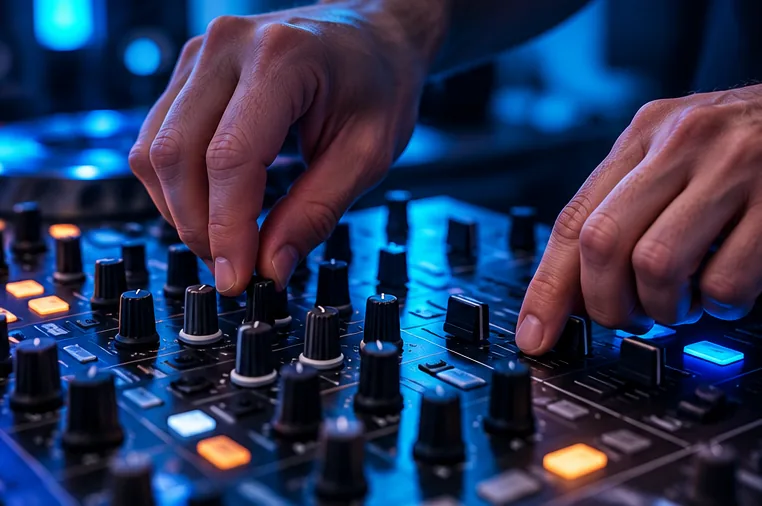
What EQ is doing
Use EQ to make space between two tracks rather than turning every control dramatically. The low EQ usually needs the most attention because two full basslines can quickly become muddy. Keep changes deliberate, listen in headphones first and return controls towards neutral once the transition is complete.
Make space for the bassline
During a blend, decide which track should own the bass, which musical elements you want the audience to notice and how long the overlap needs to last. Small mid and high adjustments can reduce clashes, but phrasing and track selection still matter more than constantly twisting all three EQ bands.
The EQ mistake that makes a mix sound thin
Avoid cutting every EQ band on the incoming track and then opening them all at once. That often creates a thin transition followed by a sudden jump in energy. Practise changing one band at a time while keeping the channel levels consistent.
A 10-minute EQ practice drill
Practise the same 16- or 32-bar transition three times: once with only channel faders, once with a bass swap, and once with a subtle mid adjustment. Record the attempts and choose the version that sounds most natural rather than the one with the most knob movement.
What the low, mid and high controls usually affect
The low EQ contains much of the kick and bass energy, so overlapping two full low ends can make a transition sound heavy or muddy. The midrange often carries vocals, synths and much of the musical identity of a track. High frequencies contain hats, percussion and brightness.
Those boundaries are not exact and every mixer uses its own filter shape, but the model is useful: decide which track should own the bass, then make smaller mid and high changes only when the two arrangements actually compete.
Use your ears before copying an EQ routine
Some tutorials teach a fixed sequence such as turning one bass control down while turning the other up. That can be a useful practice exercise, but it is not a rule. A track with very little low end may need almost no bass swap, while two dense tracks may need a shorter overlap instead of more EQ movement.
Record the same transition with different amounts of EQ and listen back away from the controller. The version with fewer control movements is often the cleaner one.