
A Sensible First DJ Setup Under £500
How to divide a £500 budget without overspending on the wrong part of the system.
Priorities
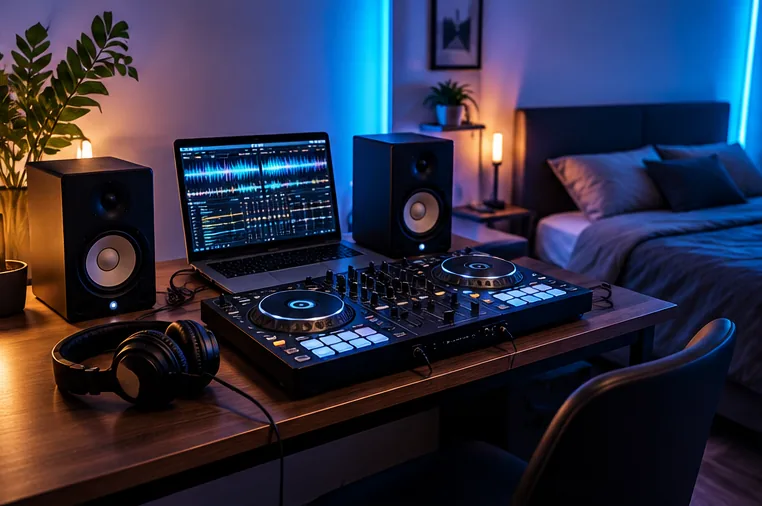
The controller should be dependable and well supported, but it does not need to consume the entire budget. Allocate money to wired headphones and the correct audio connections. If you already own suitable speakers, spend less now and upgrade monitoring later.
A balanced split
A typical split might put roughly half to two-thirds of the budget into the controller, 10–20 percent into headphones, and the remainder into compact monitoring or essential cabling. Exact products change, but the allocation principle remains useful.
What to avoid
Avoid bundles padded with low-value accessories. Check whether the controller includes the software access you expect, whether your computer meets requirements and whether the output sockets match the speakers you intend to use.
Put the money into the parts you use every session
On a first setup, the controller and headphones affect almost every practice session, so they deserve priority over decorative extras. Speakers matter if you want to practise out loud, but a smaller pair of powered monitors is usually more useful at home than a large party speaker that cannot be used comfortably in the room.
Leave enough of the budget for the unglamorous parts that make the system usable: the correct USB or power cable, a stable stand or desk position, and a legal music source. A £500 setup that is complete and easy to connect is better than a £500 controller that leaves no money for monitoring or cables.
Plan the second purchase before you make the first
Think about what you are likely to add next. If the first goal is bedroom practice, the next purchase may be better headphones or monitors. If small parties are the goal, the next step may be a stronger output path, protective transport and eventually a PA system rather than a more complicated controller.
That upgrade path helps avoid buying the same capability twice. Choose a first controller that lets you learn comfortably, then spend later money on the limitation you actually encounter.