
BPM and Tempo Explained for Beginner DJs
Understand tempo, pitch controls and why a BPM display is only a starting point.
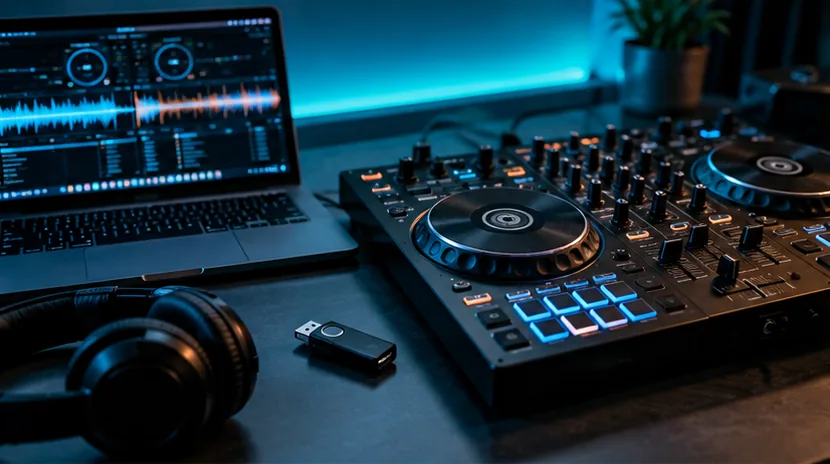
BPM measures pace, not energy
BPM means beats per minute. A track at 120 BPM has two counted beats every second, but it does not follow that it feels more energetic than every 110 BPM track. Drum arrangement, melody, density and genre change the perceived energy.
DJ software calculates a suggested BPM during analysis; that number can be wrong if the track has an unusual rhythm, a live drummer or a deliberate tempo change.
How the tempo slider works
A controller tempo or pitch fader changes the playback speed relative to the original track. A displayed percentage is the proportion of change, not the target BPM.
Moving a 120 BPM track to 125 BPM requires roughly a 4.17% increase, while lowering it to 115 BPM requires roughly a 4.17% decrease.
Different controllers have different slider precision and tempo-range settings, so check the software readout rather than assuming a physical position has a fixed result.
Why half-time and double-time appear
Some analysed tracks can show 70 BPM when you expected 140, or 87 when you expected 174. Those readings can describe the same pulse at different counting levels.
The software grid may still need checking, especially around breaks or percussion-led intros.
Count the kick and snare pattern yourself before changing the library BPM field, because a sudden change based only on a number can make saved cue points and grids behave unpredictably.
BPM is not the only mixing decision
Matching tempo does not guarantee a good transition. Listen for phrasing, key relationships, overlapping vocals and clashes in the bass.
A track with a compatible BPM but a long, busy vocal section may be harder to mix than a slightly faster track with a spacious instrumental intro. Use tempo as one selection filter, then use your ears.
Simple tempo practice
Take three songs at similar tempo, note the software BPM and count eight bars by ear. Adjust the second track until it holds alongside the first for sixteen bars.
Repeat without looking at the waveforms, then check the displays to see how close you were. This builds the connection between a number on the screen and a rhythmic change you can actually hear.