Microphones for DJs: What You Actually Need
Wired, wireless and controller mic inputs for announcements and mobile work.
The short answer
Wired, wireless and controller mic inputs for announcements and mobile work. The right choice depends on your equipment, intended use and how much complexity you actually need.
Choose for voice, environment and connection
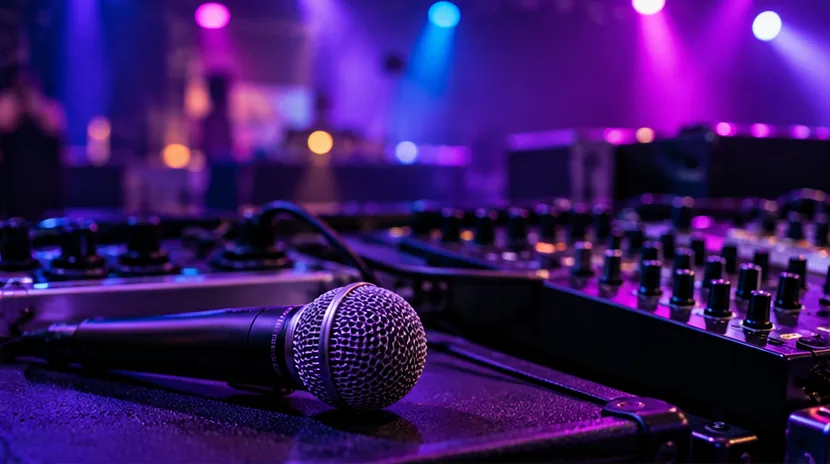
For announcements and MC work, a handheld dynamic microphone with a directional pickup pattern is often a practical starting point because it tolerates live environments well.
Check whether your controller or mixer accepts the microphone connector you plan to use, and remember that wireless systems add batteries, receivers and frequency planning.
Do not fix feedback by simply turning everything down
Feedback usually comes from the microphone hearing too much of the loudspeaker signal. Keep the microphone behind the main speakers, work close to the mic, set gain sensibly and avoid pointing it at a monitor. Better placement usually solves more than random EQ cuts.
Test speech at real event level
Soundcheck the microphone while music is playing at a realistic level. Make sure announcements remain clear, the gain control has useful headroom and you know how to mute the microphone quickly when it is not in use.
Wired and wireless microphones solve different problems
A wired dynamic microphone is simple, predictable and difficult to forget to charge. It is often a good choice when the DJ speaks from the booth or when a microphone is only needed occasionally.
A wireless system is more convenient for speeches, introductions and people moving around the room, but it adds batteries, receiver placement and radio-frequency planning.
For a first event setup, decide who will use the microphone and how far they need to move. Do not pay for wireless convenience if a short wired run from the booth solves the actual job.
Prevent feedback before reaching for the EQ
Keep the microphone behind the main speakers where possible, point the microphone away from loudspeaker coverage and ask the speaker to hold it close enough to their mouth. A microphone held far away needs more gain, which increases the chance of feedback.
Set input gain while someone speaks at realistic volume, then bring the channel into the room gradually. If feedback begins, lower the microphone level and reconsider placement before applying aggressive EQ cuts that can make speech thin and difficult to understand.