DJing in a Flat: A Quiet Practice Setup That Still Feels Good
Choose headphones, monitor placement and realistic volume controls when sharing walls or living in a small space.
Design around your room, not a showroom photo
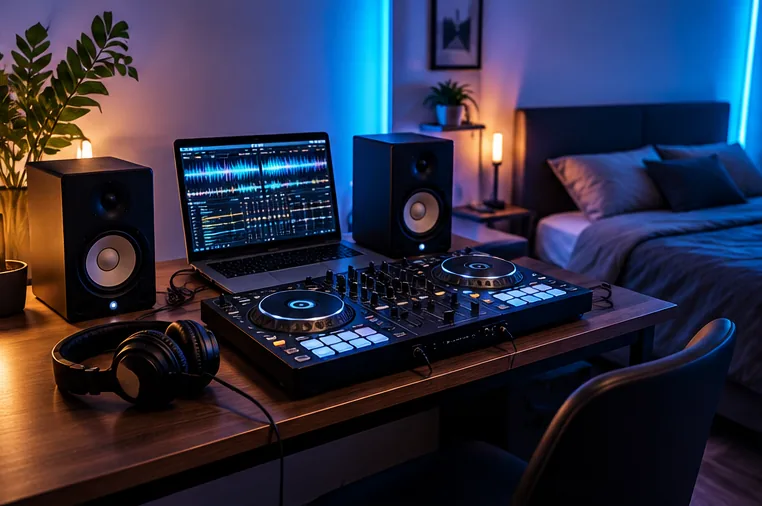
A small flat might offer only a desk, a laptop, controller and headphones. That can be a complete learning environment. Large speakers are not a prerequisite for counting beats or practising phrasing.
Start by measuring the available width and allowing enough room for the controller's rear connections so cables are not sharply bent against a wall.
Use headphones for most technical practice
Closed-back wired headphones can make it easier to monitor two decks at controlled levels without filling the room with bass. Keep the sound at a safe, comfortable level and take breaks.
Avoid assuming quiet neighbours mean your headphones are safe; sustained high headphone volume can still be harmful. A controller with independent headphone cueing is particularly useful because you can rehearse a transition privately.
When small monitor speakers make sense
Small powered monitors can make listening more comfortable at moderate levels and help you hear how a mix translates to speakers. Position them securely near ear height, ideally not buried behind the laptop.
Use isolation pads if your desk vibrates, but remember they will not solve every bass-transmission problem. Walls, floors and the building itself can transmit low frequencies, particularly at night.
A tidy and reliable desk layout
Put the controller in easy reach, the laptop behind it at a readable angle and the headphones somewhere they cannot fall onto the jog wheels. Route the power and audio cables separately where practical and keep liquids off the desk.
Avoid stacking equipment onto unstable furniture. With limited space, a compact stand may be more useful than buying more speakers.
How to practise musical decisions quietly
Create a three-track warm-up playlist. Use the headphones to cue Track B while Track A plays. Record a practice blend if your software and music source allow it, then listen back at a modest level. Work on phrase timing, EQ overlap and track selection rather than trying to imitate nightclub loudness.
When you do need to hear a room
Before a live performance, practise on actual speakers in a suitable environment if possible. Headphone practice cannot fully teach you how bass behaves in a room or what a PA does. That is a separate stage of your development—not a reason to run large speakers at home. For layout ideas see small bedroom setups.