How DJ Headphones and Cueing Work
Learn what the cue buttons, headphone mix and level controls actually do.
Why DJs cue
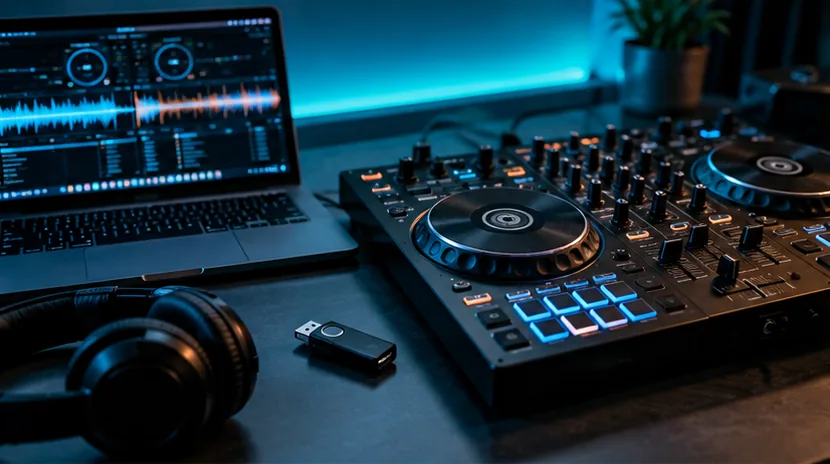
Cueing lets you hear a track before the audience hears it. Pressing the cue button on a channel routes that channel to your headphones, allowing you to set the start point, check phrasing and match tempo while the master output continues playing.
Cue mix
Many controllers include a cue/master mix control. Turned toward cue, you hear the selected cue channels. Turned toward master, you hear what the audience hears. Blending the two can make beatmatching easier.
Wired beats Bluetooth for cueing
Bluetooth headphones add latency. That delay makes accurate cueing and beatmatching frustrating, so wired headphones remain the practical choice for DJ monitoring.
Common no-sound checks
If headphones are silent, check the correct channel cue button, headphone level, cue/master blend, software audio routing and whether the headphones are connected to the controller rather than the wrong device.
What you are actually listening to in the headphones
The cue buttons on a controller or mixer decide which channels are sent to the headphone bus. That lets you listen to a track before the audience hears it. The headphone level controls how loud that private mix is, while the cue/master or mix control changes the balance between the cued channel and the master output.
Practise identifying those controls without looking at the screen. A useful routine is to play one track to the master, cue a second track in the headphones, then move the cue/master control slowly until you can hear how the two rhythms relate. That skill is more useful than simply turning the headphones up.
Protect your hearing while cueing
Headphones can become dangerously loud because they are close to the ears and DJs often turn them up to compete with room sound. Use the lowest level that lets you make decisions clearly, and reduce the booth or speaker level if you find yourself constantly increasing headphone volume.
If one ear is covered and one ear is listening to the room, keep the two levels reasonably balanced. Hearing fatigue makes timing and EQ decisions worse long before the session feels physically uncomfortable.