
How to Plan a Two-Hour Party DJ Set Without Sounding Scripted
Build an adaptable two-hour structure with warm-up, energy peaks, backups and crowd-responsive alternatives.
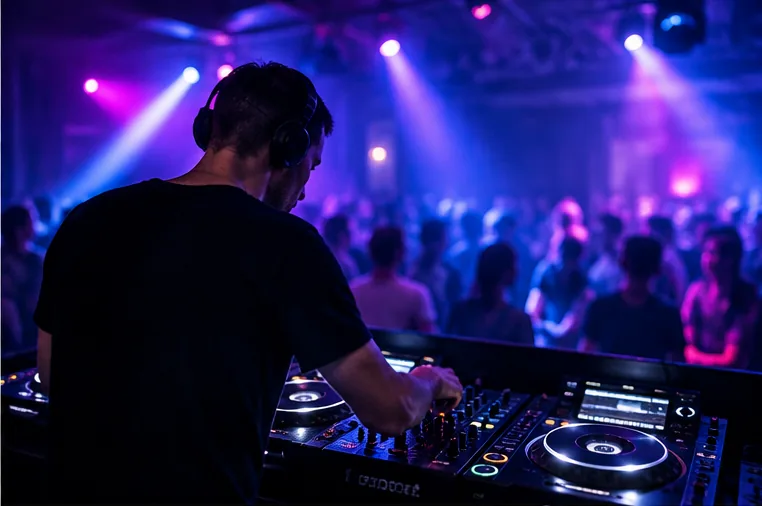
Start with the event, not the songs
Two hours at a family celebration is different from two hours at a dance-music bar. Ask who is attending, what the organiser hopes people will do, whether there are announcements, and which styles are welcome or out of bounds. Your job is not to force a perfect set list onto every room.
Create four flexible blocks
One useful planning method is to work in roughly thirty-minute blocks. Block 1: establish a mood while people settle. Block 2: build the groove and bring more attention to the dance floor. Block 3: create a peak with your strongest selections. Block 4: choose whether to sustain, refresh or wind down according to the event. These blocks are prompts, not mandatory BPM changes or fixed genres.
Prepare options instead of a rigid order
Within each block, keep a handful of reliable tracks and several alternatives. Include songs with clean intros, short transitions and a few 'rescue' favourites you know well.
Note where you could move into a different genre without an awkward jump. The right choice in the moment may not be the next track in your practice playlist.
Balance familiarity and surprise
At a general party, recognised choruses can build confidence, while unfamiliar music can refresh the room when introduced thoughtfully. Alternating every track between wildly different genres often breaks flow.
Short runs of complementary songs can create momentum, but be ready to switch direction if people stop responding.
Prepare the final ten minutes
Agree with the organiser how the event is meant to end: a singalong, a gentle close or one last energetic track. Keep a fallback in case you are asked to finish earlier. Do not start a long closing sequence if the venue's finish time is fixed and approaching.
A practice exercise you can do tonight
Build a twenty-track candidate list, divided into four groups. Record a fifteen-minute sample from each group, imagining different audience reactions. Note alternative next tracks after each recording. The aim is to make your planning flexible enough that you can stop looking at the playlist and start listening to the room. For the equipment side see first gig preparation.