
Where Do DJs Get Their Music? Downloads, Record Pools and Streaming
Most DJs build their libraries from a mix of purchased downloads, DJ record pools and supported streaming services. The best source depends on the music you play, the software you use and whether you need files that will work offline at a gig.
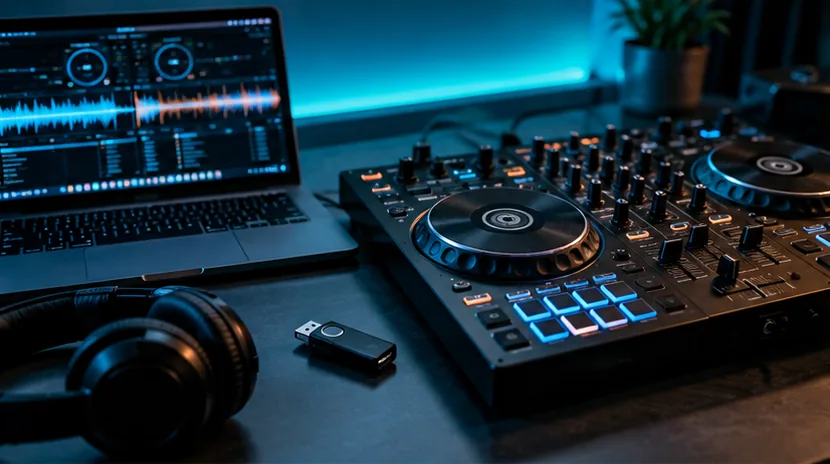
Best places to get DJ music in 2026
| Source | Best for | What you get | Offline reliability |
|---|---|---|---|
| Beatport | House, techno and electronic music | Individual purchases plus optional DJ streaming | Excellent when you buy and download files |
| Bandcamp | Independent artists, labels and harder-to-find releases | Artist-direct purchases and high-quality downloads where offered | Excellent for purchased downloads |
| Traxsource | House and underground dance music | Purchased downloads from a DJ-focused store | Excellent |
| Juno Download | Broad electronic catalogue and specialist genres | Purchased digital downloads | Excellent |
| DJcity | Open-format, club and mobile DJs | Subscription downloads, DJ edits, clean versions and tools | Strong: downloaded files can be prepared locally, subject to service terms |
| BPM Supreme | Open-format, Latin, hip-hop, dance and event DJs | Subscription record-pool catalogue and playlists | Strong when tracks are downloaded in advance |
| Beatport Streaming | Electronic DJs who want direct software access | Streaming catalogue integrated with supported DJ software and hardware | Depends on plan, software and offline support |
| TIDAL | Broad catalogue inside supported DJ apps | Streaming integration with platforms including rekordbox, Serato and VirtualDJ | Varies by application and plan |
| SoundCloud Go+ | Remixes, emerging artists and underground discovery | Streaming inside supported DJ applications such as rekordbox and Serato | Do not assume normal offline listening equals offline DJ use |
If you are searching for where to download music for DJing, start with legitimate download stores or record pools that provide local files you can back up. Use streaming as an additional source when your DJ software officially supports it, not as your only plan for an important gig.
Services, catalogues, prices and DJ integrations change. Check the provider and your DJ software before subscribing.
Option 1: buy downloadable tracks
For a dependable DJ library, purchased files are still the simplest option. Once the track is downloaded and backed up, you are not relying on a venue's Wi-Fi, a streaming licence or a service being available on the night.
Beatport
Beatport remains one of the obvious starting points for electronic DJs. It is particularly useful for house, techno and related dance genres, with charts, label pages and DJ-focused discovery. Beatport also operates a separate streaming service that works with a wide range of DJ software and hardware.
Bandcamp
Bandcamp is valuable when you want to buy directly from artists and independent labels. It is often where you find releases that are less visible on mainstream DJ stores, and purchases commonly include high-quality downloadable formats. It is especially worth checking when you discover a track through an artist, label or underground scene rather than through a chart.
Traxsource
Traxsource is another DJ-focused download store with a strong reputation in house music and related genres. Its downloader can organise purchased files into a local library, which suits DJs who prefer to own and prepare their music before a set.
Juno Download
Juno Download is useful for digging across electronic styles, labels and specialist genres. It is a good second place to search when a release is unavailable on your usual store.
Option 2: use a DJ record pool
A DJ record pool is different from a normal download shop. You pay a subscription for access to a catalogue aimed at DJs. Depending on the pool, that may include extended intros, clean edits, instrumentals, acapellas, transition tools and remixes designed for mixing.
DJcity
DJcity describes itself as a subscription download record pool and currently promotes global music, DJ edits, curated playlists and versions designed for mixing. It can make particular sense for open-format, wedding, radio and event DJs who need a wide range of current material rather than only one electronic genre.
BPM Supreme
BPM Supreme is another established record pool covering areas including open format, Latin, hip-hop, dance, rock and country. That broad catalogue can suit mobile DJs who need to respond to requests across several styles.
Before paying for any pool, check its current membership rules and terms. In particular, confirm whether downloaded music remains usable after cancellation and whether the catalogue suits your region and genres.
Option 3: stream directly inside DJ software
Streaming can be extremely useful for music discovery, requests and practice, but a normal consumer music subscription does not automatically work inside DJ software. You need a supported service, the correct account level and compatible DJ software or hardware.
Beatport Streaming
Beatport's DJ streaming service currently lists integrations across major DJ platforms and offers different plan levels, including options with offline storage in supported software. This can be useful for discovering and preparing electronic music without purchasing every track immediately.
TIDAL
TIDAL currently lists DJ integrations including rekordbox, Serato and VirtualDJ. It is attractive when you want a broad mainstream catalogue alongside your owned DJ library. Feature support can differ between DJ applications, so check your exact setup rather than assuming every feature transfers between platforms.
SoundCloud Go+
SoundCloud Go+ specifically promotes DJ-software integration and is useful for remixes, demos and underground material. SoundCloud currently names rekordbox and Serato among its DJ integrations. Remember that offline listening in the SoundCloud app is not the same thing as guaranteed offline DJ-software access.
Which music source is best for your type of DJing?
| Type of DJ | Good starting approach |
|---|---|
| Bedroom beginner | Buy a small set of tracks you genuinely like, then use supported streaming for discovery and extra practice. |
| House / techno DJ | Start with Beatport, Traxsource, Bandcamp and Juno Download; follow labels as well as individual artists. |
| Open-format DJ | A record pool such as DJcity or BPM Supreme can save time, supported by purchased tracks for gaps and favourites. |
| Wedding / mobile DJ | Prioritise a reliable local library. Record pools can help with clean edits and broad genres; streaming is useful as a secondary source for unusual requests. |
| Club DJ using USBs | Purchased/downloaded files are the safest core. Prepare and export them through your library software, then test the USB before the gig. |
MP3, WAV, AIFF or FLAC?
You do not need to choose the largest file format automatically. What matters is that the track is legitimately sourced, sounds good and is supported by the equipment you will use.
A high-quality MP3 can be perfectly practical for DJing, while WAV, AIFF and FLAC offer lossless audio with different tagging and compatibility trade-offs.
For a fuller breakdown, see MP3, WAV, AIFF and FLAC for DJs.
Why downloading music from YouTube is a poor DJ-library strategy
Ripping audio from videos can leave you with uncertain quality, misleading file extensions, incomplete metadata and unclear rights. It also creates a library that is difficult to replace or verify later. Build your collection from legitimate stores, artist downloads, record pools and supported services instead.
A practical first DJ library
- Choose 20–40 tracks you already know well.
- Buy or legitimately download a core set so you can practise without an internet connection.
- Organise the files by genre, energy or purpose rather than throwing everything into one folder.
- Analyse the tracks in your DJ software and check beatgrids, cue points and volume.
- Back up both the original files and your DJ-music library.
- If you use streaming, test the exact account, software and hardware combination before relying on it.
See How to Organise a DJ Music Library, the rekordbox library workflow and How to Back Up Your DJ Music Library.
Frequently asked questions
Where do DJs get their music?
Most DJs use a mixture of specialist download stores, direct artist or label purchases, DJ record pools and supported streaming services. There is no single source that suits every genre or type of DJ.
Is Beatport the best place to buy DJ music?
It is one of the strongest choices for electronic music, but not automatically the best source for every track. Traxsource, Bandcamp and Juno Download can be better for particular labels, genres or independent releases.
Can DJs use Spotify?
Do not assume a normal Spotify subscription can be loaded into your DJ software. DJ integrations are service- and software-specific. Check the current streaming options supported by your platform; see our DJ software streaming guide.
Do DJs have to buy every song?
No. Record pools and supported streaming subscriptions provide alternative ways to access music, subject to their current terms. However, buying a core library gives you predictable offline access and is especially useful for tracks you rely on regularly.
Should I use streaming at a wedding or paid event?
It can be useful for filling an unexpected request, but it should not be your only plan. Keep enough local music to complete the event if the internet connection or streaming service fails.
Related guides
- DJ Streaming Services: What Works With DJ Software?
- How to Organise a DJ Music Library
- MP3, WAV, AIFF and FLAC for DJs
- How to Prepare and Test a USB Drive for Club DJing
- How to Back Up Your DJ Music Library and Cue Points
- Compare DJ software
- Prepare for your first DJ gig
FirstFader is not a music-licensing authority. Music access, download rights and public-performance licensing are separate issues. Check service terms and the relevant requirements for the venue, event and territory.