Studio Monitors vs PA Speakers for DJs: Which Do You Need?
Why accurate nearfield listening and filling a room are different jobs.
The short answer
Why accurate nearfield listening and filling a room are different jobs. The right choice depends on your equipment, intended use and how much complexity you actually need.
Choose for listening distance and room size
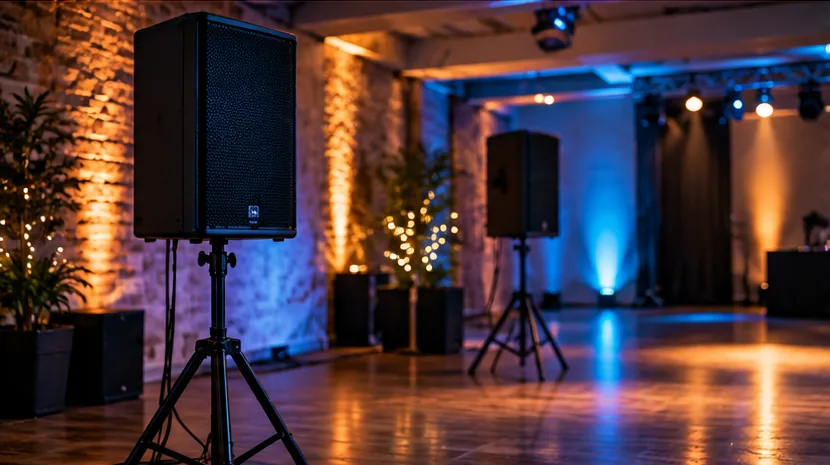
Studio monitors are designed for close listening and detail at a desk or small practice position. PA speakers are designed to project sound across a room and provide more output for events.
The right choice depends less on the word “DJ” on the box and more on where the speakers will be used and how many people need to hear them.
Do not use desktop monitors as a party PA
Small monitors can sound excellent at home but they are not built to cover a noisy room full of people. Driving them at maximum level for long periods can sound harsh and still fail to provide the coverage you need. For events, plan around proper powered PA speakers or a venue system.
Choose the speaker for the job
If you are practising at home, compare compact powered monitors and place them at sensible listening height. If you are preparing for events, work out the room size, expected audience and whether you need stands, a subwoofer or a venue-provided PA.
Nearfield accuracy and room coverage are different design goals
Studio monitors are intended to be heard from relatively close range, which makes them useful for bedroom practice and detailed listening. PA speakers are built to project farther and cope with higher sustained levels in rooms with more people and background noise.
That difference affects placement as well as volume. Monitors normally sit around ear height and form a small listening triangle. PA speakers are usually raised and aimed to cover an audience area. Using the wrong type does not automatically damage anything, but it can make the system work badly for the space.
Many DJs eventually use both
A practical path is to learn and prepare music on monitors at home, then use a venue PA or portable PA for events. The controller can remain the centre of both systems while the output connection changes to suit the room.
If you are moving between home and gigs, learn where the master level, booth level and speaker input controls sit in the signal chain. That knowledge transfers between monitor and PA systems and makes soundchecks much easier.