Used DJ Turntables: A Beginner’s Inspection Guide
What to check on second-hand vinyl decks, including tonearms, cartridges, pitch controls and motor stability.
Define what you are buying
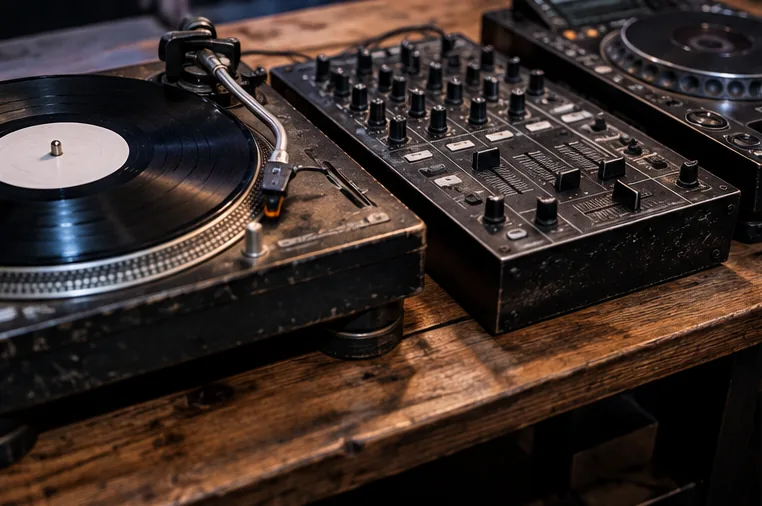
A DJ turntable is not the same as a general-purpose record player. For mixing and scratching, buyers often look for a stable drive, adjustable pitch and a robust tonearm. Check the exact model and its intended use before comparing prices.
Some older units need separate phono preamplification; a turntable's phono-level output should not be assumed to work directly into every modern line input.
Inspect mechanical condition
Look for a platter that spins evenly, a start/stop button that responds reliably and a tonearm that moves freely without excessive play. Check the headshell connection, counterweight, anti-skate controls where fitted and the cue lever mechanism.
Surface wear can be minor; a bent tonearm or inconsistent motor is much more consequential.
Test speed and pitch control
With a suitable record, listen for speed instability or obvious variations. If the deck offers pitch adjustment, test it across its useful range and check that the speed changes smoothly.
A strobe, where provided, can help assess stability, but do not depend on a photograph of spinning dots as proof of accurate speed. An unfamiliar model may need servicing even if it powers on.
Check the cartridge and stylus separately
A worn or damaged stylus can damage records and is a consumable, not simply a cosmetic issue. Unless its history is documented, budget for a replacement compatible stylus or cartridge.
Make sure both channels of the phono signal work and listen for hum or intermittent connections. Inspect the ground wire and plugs if the design uses them.
Remember the rest of the vinyl setup
Two turntables alone do not make a complete DJ rig. You may need a mixer with suitable phono inputs, headphones, cartridges, slipmats, records and protective cases.
If you plan to use digital vinyl (DVS), verify that your interface, mixer and software support the intended configuration, including any licensing requirements.
Make a realistic buy-or-pass decision
Ask whether replacement styli, belts if applicable, parts and professional service remain obtainable. Estimate those costs before comparing the turntable with a newer alternative.
Take a record you know, perform a listening test where possible, and never assume a turntable is a bargain solely because it looks like a classic DJ model.
Related guides
- What to Check Before Buying a Used DJ Controller
- DJ Controller vs Decks: What Is the Difference?
- Is an Old DJ Controller Still Worth Buying?
- Browse current and discontinued equipment
- Build a DJ setup that fits your budget
Browse used DJ turntables
Paid affiliate links. FirstFader may earn a commission from qualifying eBay purchases at no extra cost to you. Used condition and seller terms vary, so inspect the exact listing carefully.
Related used searches
Listings change continuously. Read the affiliate disclosure.