
PA Speaker Placement for Small DJ Events
Position speakers for clear sound while keeping stands, cables and people safe.
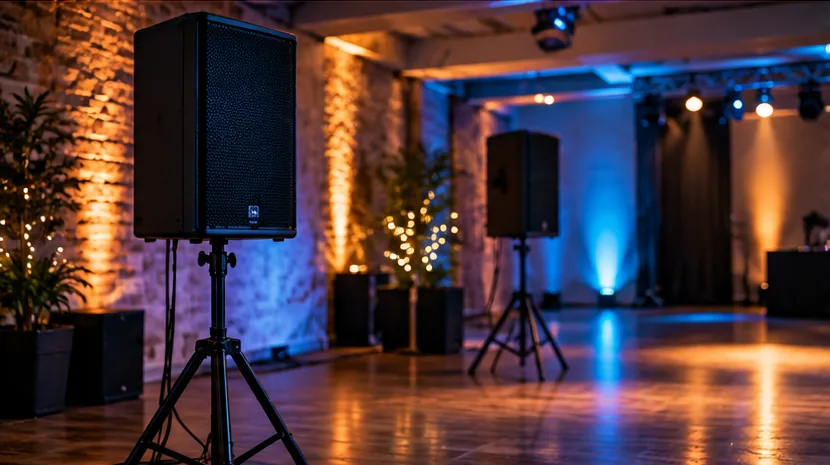
Start with coverage rather than brute volume
A good PA layout aims to deliver intelligible, reasonably even sound across the audience rather than maximum level at the DJ table. Consider how the room is shaped, whether the audience stands or sits, and where the dancefloor is.
Aim cabinets into the audience area and away from reflective corners or microphones where possible. Speaker coverage angles and mounting requirements differ, so consult the manufacturer's manual.
Raise speakers safely
Many small events benefit from the main speakers being mounted above typical audience head height so that high-frequency sound travels beyond the first row.
Use stands with the correct load rating, footprint and mounting arrangement; add ballast only where suitable and follow the stand's guidance. Keep stands away from children, crowds, doorways and unstable floors. Never improvise a precarious platform with chairs or boxes.
Think about microphones and feedback
Keep vocal microphones behind the main PA speakers where practical, with the speaker fronts aimed away from microphone pickup. The exact ideal position depends on the microphone polar pattern, stage and room.
If a ringing tone starts, reduce the mic channel level and reposition before increasing anything. Trying to overwhelm feedback with more volume makes the problem worse.
Protect cables and audience
Avoid long loose runs across walkways. Use appropriate cable protection and follow venue rules for electrical supply. Check that no loudspeaker is within unsafe reach of the crowd and that the placement meets venue/event requirements.
The UK HSE publishes event noise guidance and organisers should consider audience and worker exposure; more speakers do not mean you should run everything at maximum level.
Walk the room
Listen at the front, middle and back with a known track. If front-row guests are overwhelmed while the back cannot hear vocals, reposition or adjust the system rather than blindly increasing the master.
Subwoofer placement and room modes add complexity; if you are handling a demanding venue, work with an appropriate sound professional.
Official resources and further reading
Check the current instructions for the exact software version, hardware and venue before relying on time-sensitive details.