Party Speakers vs Professional PA Speakers for DJs
The JBL PartyBox Ultimate 2 makes the line between party speaker and DJ equipment less obvious. Here is when a party speaker works—and when a proper PA is the better choice.
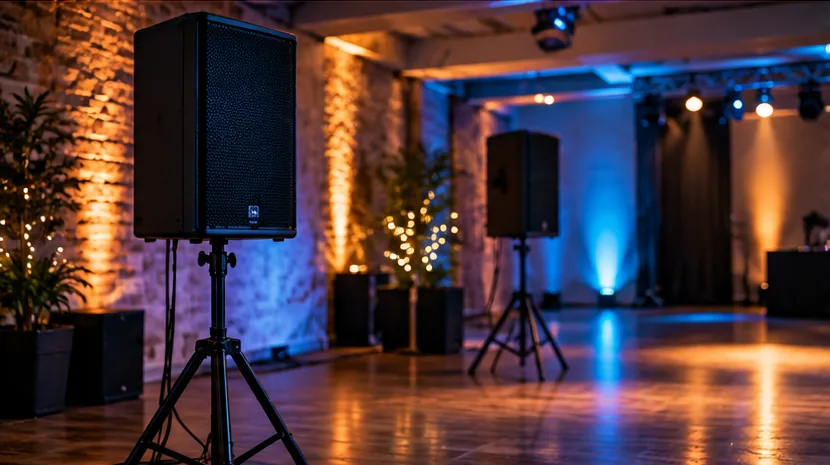
Party speaker vs professional PA
| Consideration | Large party speaker | Professional powered PA |
|---|---|---|
| Typical format | All-in-one cabinet with lighting and consumer features | Separate powered tops, often with optional subwoofers |
| DJ inputs | Varies; some models now include proper line inputs | Usually balanced XLR/TRS line inputs |
| Coverage | One large source; placement can be limiting | Two tops can be spaced for broader stereo/event coverage |
| Redundancy | One cabinet failure can remove the whole system | A two-speaker system may keep some sound running if one component fails |
| Lighting | Often built in | Usually separate |
| Expansion | Brand ecosystem dependent | Easy to add subs, monitors or additional tops |
Why the JBL PartyBox Ultimate 2 is interesting for DJs
The PartyBox Ultimate 2 is more relevant to DJs than many consumer party speakers because JBL includes a dedicated XLR line input for connecting DJ equipment. It also offers 1,500 W RMS quoted output, dual 10-inch woofers, microphone input, Wi-Fi/Bluetooth/Auracast and built-in lighting.
However, it is mains-powered and weighs about 47.7 kg. A pair of conventional active PA tops may be easier to position and gives a clearer upgrade path for subs, stands, venue cabling and redundancy.
Who should consider a party speaker?
It can make sense for a DJ who mainly plays house parties, wants an integrated lightshow and values one-cabinet simplicity. It is less convincing for a working mobile DJ who needs repeatable coverage across different rooms, straightforward balanced cabling, serviceable modular components and backup options.
When a professional PA wins
For weddings, paid mobile work and larger spaces, start by looking at proper powered PA systems. FirstFader currently covers options such as Pioneer DJ XPRS, Yamaha DXR and QSC systems, including separate subwoofers for events that need more low-frequency output.